

Episode 3 of A Knight of the Seven Kingdoms, titled The Squire, delivers the most character focused chapter of the season so far. Instead of expanding the political scale or escalating spectacle, the episode narrows its focus and invests fully in the growing partnership between Ser Duncan the Tall and his young squire, Egg.
For viewers searching for high fantasy chaos or dragon fueled destruction, this episode may feel restrained. For those who appreciate grounded storytelling rooted in character psychology and moral tension, Episode 3 represents the series at its strongest.
Egg Steps Into the Egg Moves From Sidekick to Centerpiece
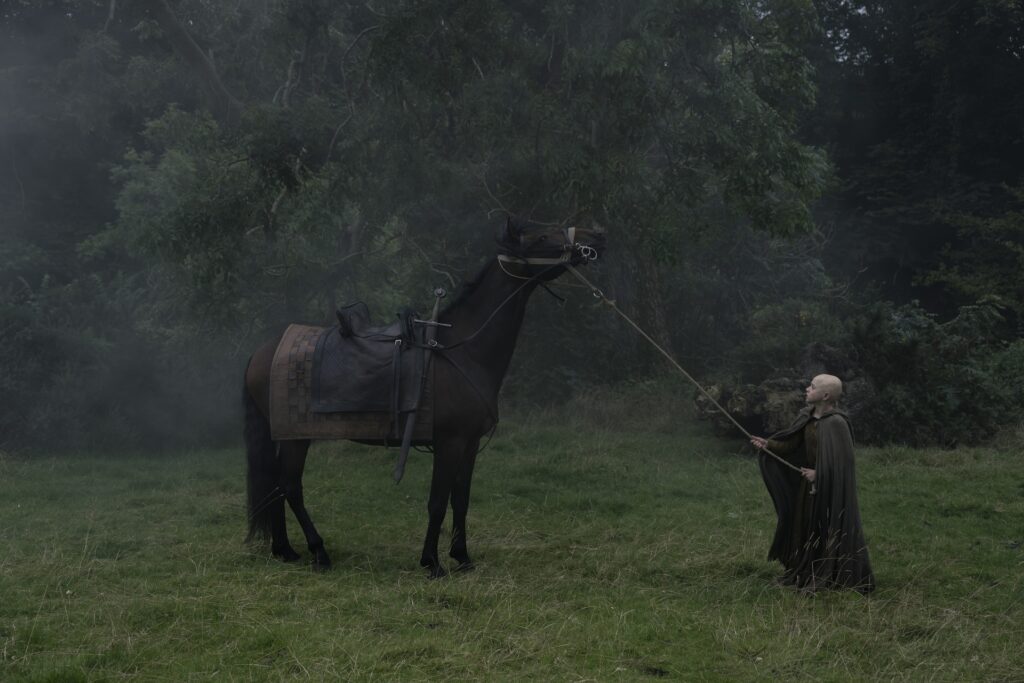
One of the most important developments in A Knight of the Seven Kingdoms Episode 3 is the narrative shift toward Egg. What initially appears to be a small subplot involving Dunk’s stubborn horse becomes a subtle character study.
Egg’s intelligence, discipline, and confidence are no longer background traits. They are central to the story. His ability to observe, adapt, and quietly assert himself demonstrates that he is far more than a clever boy tagging along with a hedge knight.
At the same time, Dunk’s mentorship reveals its imperfections. He may carry the title of knight, but Episode 3 makes it clear that he is still learning what knighthood truly means. The lesson he passes to Egg is less about combat and more about judgment, restraint, and honor.
This dynamic gives The Squire emotional weight. It is not just about training. It is about responsibility.
The Ashford Steward and the Cost of Survival
The proposition presented to Dunk introduces the episode’s core tension. It is not a battlefield threat. It is something more subtle and perhaps more dangerous. Stability.
For a wandering hedge knight struggling to secure income and recognition, the offer represents security and legitimacy. In the world of Westeros, that is no small temptation.
A Knight of the Seven Kingdoms Episode 3 handles this dilemma with patience. There is no dramatic outburst. Instead, the tension unfolds internally. Dunk is forced to weigh survival against principle. Egg watches closely, learning what kind of man his knight will become.
This is where the writing shines. The stakes feel personal and grounded. The conflict is moral rather than explosive.
Direction and Cinematography Ground the Story
Visually, The Squire continues the restrained aesthetic of the HBO adaptation. The tourney grounds are alive with movement, but the camera prioritizes faces over spectacle.

Close framing reinforces the intimacy of the story. The world feels lived in rather than mythic. Earth tones and natural lighting maintain the grounded medieval realism that separates this series from the grander scale of Game of Thrones.
By focusing on quiet conversations and meaningful glances, Episode 3 builds tension through atmosphere instead of action.
Performances Elevate the Episode
The chemistry between Dunk and Egg remains the emotional anchor of the series. Their relationship evolves naturally, without forced drama.
Dunk’s physical presence contrasts beautifully with Egg’s composed intelligence. The performances feel authentic and measured. Egg in particular stands out, avoiding caricature and instead presenting a character who is observant, quietly noble, and increasingly confident.
The emotional beats land because the actors trust subtlety.
World Building and Lore Integration
For fans of Westeros lore, A Knight of the Seven Kingdoms Episode 3 continues to expand the historical texture of this era. The culture of tourneys, the rigid hierarchy of knighthood, and the social realities of minor houses like Ashford deepen the setting without overwhelming the narrative.
This is world building through lived experience rather than exposition. The episode respects the audience’s intelligence, allowing the political landscape to emerge organically.
Tension Without Dragons
Perhaps the most impressive element of The Squire is its commitment to restrained stakes. There are no apocalyptic threats looming over the continent. Instead, the danger lies in reputation, loyalty, and survival.
For Dunk, one misstep could end his career before it truly begins. For Egg, every lesson shapes his understanding of power and responsibility.
The tension is quiet but persistent. That subtle pressure gives the episode a compelling undercurrent that promises larger consequences ahead.
Score and Atmosphere
The musical score supports the emotional tone with restraint. Strings and ambient tones create a quiet melancholy that lingers beneath each scene.
Rather than announcing dramatic moments, the score enhances introspection. The atmosphere feels reflective and slightly uneasy, reminding viewers that even in times of relative peace, Westeros is never entirely safe.
Final Verdict
A Knight of the Seven Kingdoms Episode 3 proves that the strength of this HBO adaptation lies in character depth rather than spectacle. The Squire invests fully in the evolving partnership between Dunk and Egg while exploring themes of honor, mentorship, and moral compromise.


Leave a Reply