


Episode 2 of A Knight of the Seven Kingdoms expands the world established in the premiere and begins tightening the moral and political tension surrounding the Ashford tourney. Where Episode 1 introduced Ser Duncan the Tall as an ambitious hedge knight trying to prove himself, Episode 2 tests that ambition against the rigid social hierarchy of Westeros.
This chapter is less about spectacle and more about positioning. It carefully places Dunk and Egg within a web of expectations, alliances, and unspoken threats. The result is a deliberate and quietly suspenseful episode that deepens the emotional stakes without rushing toward confrontation.
Dunk Confronts the Reality of Knighthood
If Episode 1 was about aspiration, Episode 2 is about reality. Dunk quickly learns that claiming the title of knight and being accepted as one are not the same thing. The Ashford tourney exposes the brutal divide between highborn knights and wandering hedge knights. Status matters. Lineage matters. Reputation matters. Dunk has little of any of it.
The writing highlights his vulnerability without undermining his strength. He is physically imposing, but socially exposed. Every interaction carries tension because he does not fully belong.
This internal conflict makes Dunk far more compelling than a typical heroic archetype. He is constantly negotiating pride and survival.
Egg’s Intelligence Becomes Essential
In A Knight of the Seven Kingdoms Episode 2, Egg becomes more than comic relief or background presence. His quick observations and sharp understanding of courtly behavior repeatedly assist Dunk in navigating unfamiliar territory.
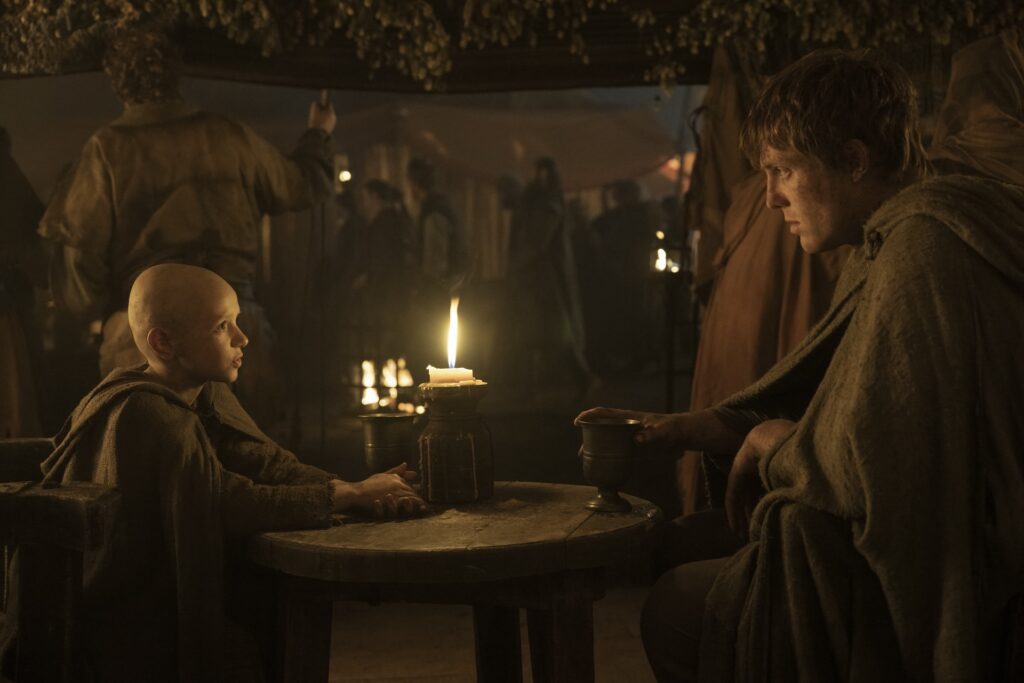
While Dunk struggles with political nuance, Egg demonstrates a natural instinct for strategy and restraint. The contrast between them continues to define the emotional core of the series.
The show subtly reinforces that this partnership is symbiotic. Dunk provides physical protection and moral conviction. Egg provides awareness and foresight. Episode 2 strengthens that balance without drawing overt attention to it.
The Ashford Tourney as Political Theater
One of the strongest elements of Episode 2 is its portrayal of the tourney not simply as a sporting event but as political theater. Beneath the colorful banners and armored knights lies a rigid power structure. Each noble house present carries influence. Every interaction hints at alliances and rivalries. The tournament grounds feel less like a festival and more like a chessboard.
The episode resists dramatic confrontation, instead allowing tension to simmer through conversation, glances, and shifting loyalties. It trusts the audience to read between the lines.
This approach mirrors the early seasons of Game of Thrones, where dialogue and positioning often carried more weight than swordplay.
Direction and Cinematography Emphasize Realism
Visually, Episode 2 maintains the grounded aesthetic established in the premiere. The camera avoids grand fantasy flourishes and instead leans into authenticity. Armor feels heavy. The tourney grounds feel dusty and lived in. The environment is textured rather than glamorous.
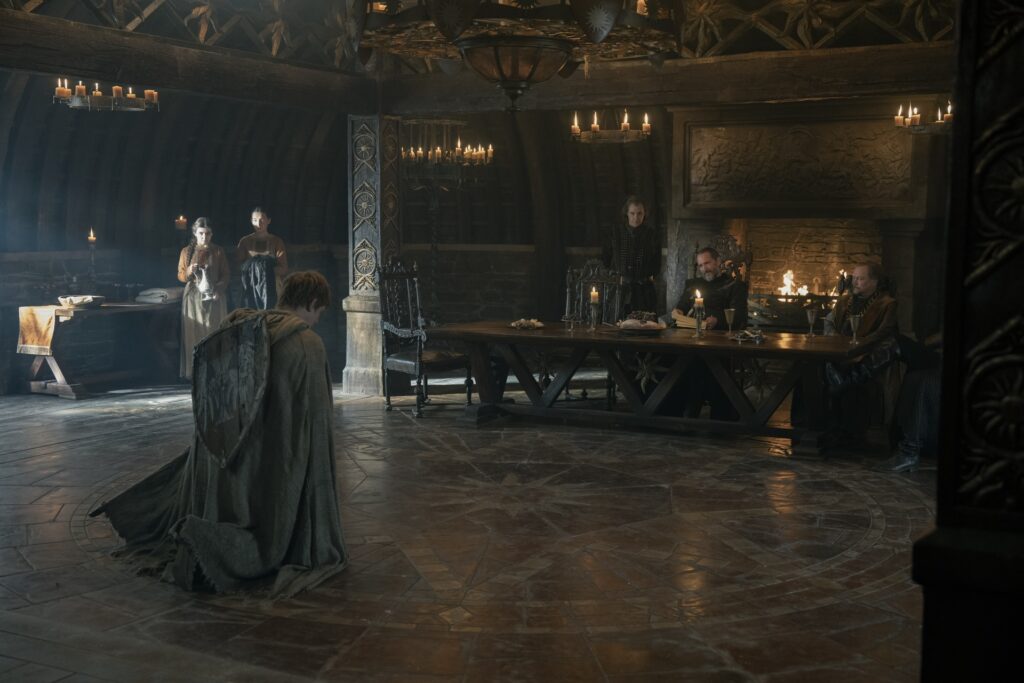
The cinematography reinforces Dunk’s outsider perspective. Wide shots emphasize how small he appears among the assembled nobility. Close framing during tense exchanges highlights his discomfort.
This is Westeros without mythic grandeur. It is practical, harsh, and unforgiving.
Performances Anchor the Emotional Weight
The performances in Episode 2 continue to elevate the material. Dunk’s quiet insecurity contrasts effectively with his imposing physical presence. His hesitation in social situations adds nuance to what could otherwise be a straightforward heroic role.
Egg remains a scene stealer through subtlety rather than exaggeration. His calm delivery and focused expressions suggest a character who understands far more than he openly reveals.
The chemistry between them feels natural. Their dynamic drives the episode even when external conflict remains restrained.
World Building and Historical Texture
A Knight of the Seven Kingdoms Episode 2 excels at historical immersion. The customs of tourneys, the hierarchy of noble houses, and the expectations placed upon knights deepen the setting without overwhelming it with exposition.
Rather than explaining the world through heavy dialogue, the show demonstrates it through behavior and consequence. This approach rewards attentive viewers and strengthens the authenticity of the era.
The connection to the broader Game of Thrones universe remains subtle but present. The political culture and emphasis on lineage remind us that Westeros has always been defined by bloodlines and ambition.
Score and Atmosphere
The musical score in Episode 2 remains understated. It supports the tension without dictating emotion. Low strings and restrained orchestration emphasize unease and anticipation.
The atmosphere feels patient and observant. Instead of explosive crescendos, the episode builds through silence and subtle shifts in tone.
This controlled pacing enhances the slow burn quality of the series.
Final Verdict
A Knight of the Seven Kingdoms Episode 2 strengthens the foundation laid by the premiere. It deepens character dynamics, reinforces the harsh realities of knighthood, and positions the Ashford tourney as a stage for inevitable conflict.
While it may lack major action sequences, the episode succeeds through tension, authenticity, and character development. It understands that reputation and honor can be as dangerous as swords.


Leave a Reply